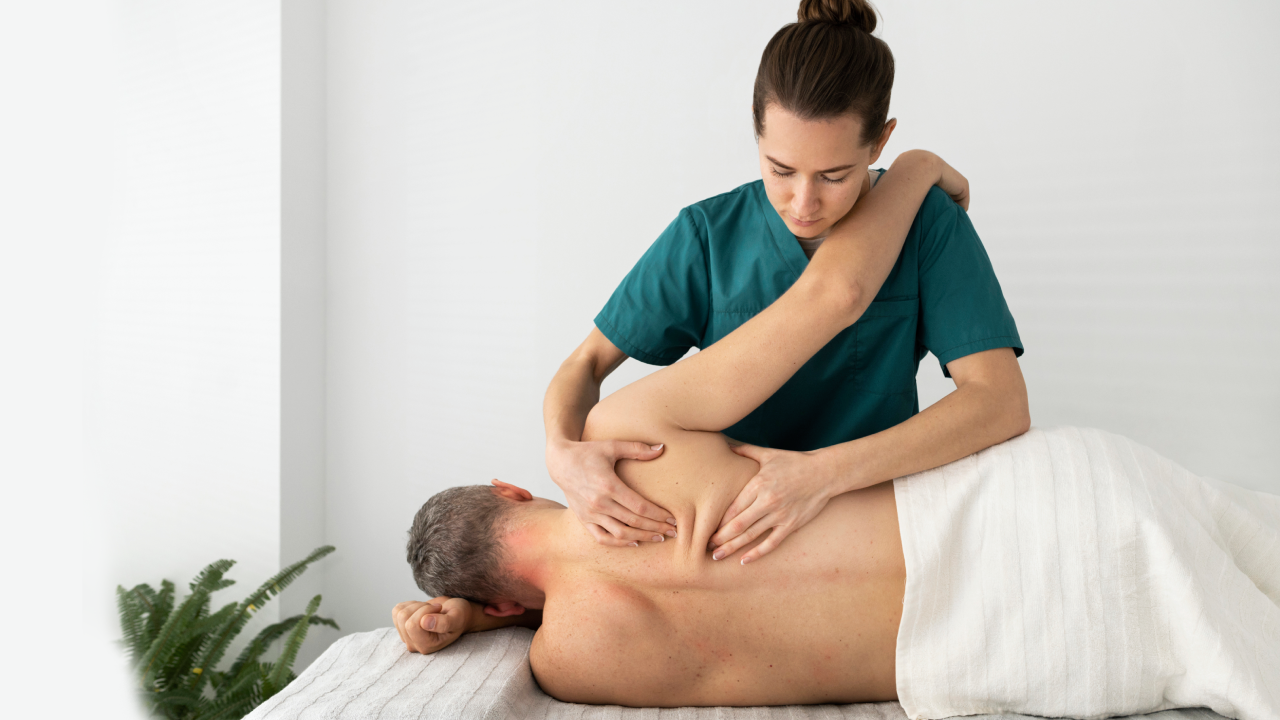
Massage therapy uses hands-on techniques to work with muscles, fascia, and other soft tissues. At Pal Physio & Rehab, our massage therapy services in Etobicoke, ON, are intended for people dealing with muscle tension, restricted movement, physical strain, and discomfort related to daily activities, work, exercise, or sports.
A massage therapy session may include techniques such as kneading, compression, friction, stretching, and soft-tissue work. Treatment is selected according to the areas being addressed and the person’s current condition. Massage therapy in Etobicoke, ON, can also be used alongside physiotherapy when a person needs support with mobility, muscle function, or physical recovery.
Massage therapy is a hands-on form of care that applies controlled pressure and movement to muscles and other soft tissues. Depending on the reason for treatment, a session may focus on a particular body region or several areas affected by physical strain.
At Pal Physio & Rehab, massage therapy in Etobicoke, ON, may be used for the following:
The therapist may use different manual techniques during a session. These can include kneading, compression, gliding movements, stretching, and focused soft-tissue work.
Massage therapy is not limited to athletes. Office workers, people who spend long hours standing, individuals with physically demanding jobs, and people returning to activity after an injury may also seek massage therapy.
Massage therapy can be appropriate for a range of people with muscle and soft-tissue concerns. At Pal Physio & Rehab, treatment may be considered for:
Long periods of sitting can contribute to tension around the neck, shoulders, upper back, and hips. Massage therapy can address areas affected by prolonged sitting and repetitive computer use.
Exercise, running, strength training, and recreational activities can place repeated demands on muscles. Massage therapy can be used as part of a broader approach to managing muscle tightness and maintaining movement.
Athletes may seek massage therapy in Etobicoke, ON, before or after training sessions, competitions, or periods of increased activity. Treatment can focus on muscles that receive repeated physical load.
Construction workers, warehouse employees, tradespeople, delivery workers, and other physically active workers may develop muscle tension from lifting, carrying, reaching, bending, or repetitive tasks.
Reduced movement, prolonged inactivity, or repeated physical activity can contribute to stiffness. Massage therapy can focus on areas where soft-tissue tension is affecting comfortable movement.
Some people receive massage therapy alongside physiotherapy. When appropriate, both services can form part of a broader rehabilitation plan focused on movement, strength, mobility, and physical function.
People may seek massage therapy in Etobicoke, ON, when muscle tension or soft-tissue discomfort begins interfering with normal activities.
Common concerns include:
Massage therapy may also be considered when a person notices that muscle tightness is affecting movement or making certain activities uncomfortable.
If symptoms are severe, sudden, persistent, or associated with swelling, numbness, weakness, fever, or significant injury, an appropriate medical assessment may be required before massage therapy in Etobicoke, ON.
Soft-tissue techniques involve controlled hand movements applied to muscles and surrounding tissues. The therapist can adjust pressure and movement according to the treatment area.
Why it matters:
Soft-tissue work can address areas of muscle tension and stiffness.
Expected outcome:
The goal may include easier movement and reduced muscle tightness.
Deeper pressure may be used on selected areas where muscle tension is more pronounced. Pressure is adjusted according to the individual and the area being treated.
Why it matters:
Some people require focused work on deeper layers of muscle tissue.
Expected outcome:
Treatment may help reduce feelings of tightness and improve movement in the treated area.
The neck and shoulder region can become tense from desk work, driving, lifting, and repetitive activity.
Why it matters:
Focused treatment can address muscle tension around frequently stressed areas.
Expected outcome:
The aim is to support comfortable neck and shoulder movement.
Back massage may focus on the upper, middle, or lower back depending on the person’s concerns.
Why it matters:
The back is involved in sitting, standing, lifting, bending, and many everyday movements.
Expected outcome:
Treatment may help reduce muscle tightness and make movement more comfortable.
Sports massage uses massage techniques suited to physically active people. Sessions may focus on muscles involved in training or recreational activity.
Why it matters:
Repeated training can place substantial demands on specific muscle groups.
Expected outcome:
Treatment may support mobility and help manage muscle tightness associated with physical activity.
Massage therapy and physiotherapy can be used together when clinically appropriate. Physiotherapy may address strength, mobility, movement patterns, and functional limitations, while massage can focus on soft-tissue tension.
Why it matters:
Different forms of care can address different aspects of a movement-related concern.
Expected outcome:
The combined approach may support a broader rehabilitation plan.
Your first visit begins with a discussion about your current concerns, daily activities, physical demands, and the areas you want addressed.
The therapist reviews relevant movement and soft-tissue concerns. This helps determine which areas may require attention during the session.
The therapist selects suitable massage techniques based on the findings, your comfort level, and the reason for seeking treatment.
Hands-on techniques are applied to the selected areas. Pressure and technique may be adjusted during the session based on how your body responds.
After treatment, the therapist discusses how you responded to the session and whether any movement or activity changes may be useful.
Some people attend massage therapy periodically, while others may only need sessions during periods of increased physical demand. The schedule depends on individual needs and clinical recommendations.
Massage therapy can provide practical support for people dealing with muscle and soft-tissue concerns.
Potential benefits include the following:
Results vary from person to person. Massage therapy should be considered as one part of physical care rather than a universal solution for every condition.
Pal Physio & Rehab provides massage therapy in Etobicoke, ON, for people from a range of backgrounds and activity levels.
Our clients may include:
Massage therapy can be used for a specific area of concern or as part of a wider physiotherapy and rehabilitation plan.
Massage therapy may include hands-on techniques such as kneading, compression, gliding movements, stretching, and focused soft-tissue work. The techniques used depend on your needs and the area being treated.
Appointment length can vary depending on the treatment area, clinical needs, and the type of session. Pal Physio & Rehab can provide appointment details when you contact the clinic.
Your therapist will explain what clothing or draping is appropriate for the session. Only the area being treated needs to be accessible.
It depends on the type, severity, and stage of the injury. Some injuries may require assessment before massage therapy. Your therapist can determine whether massage is appropriate or whether another form of care should come first.
Yes. Massage therapy and physiotherapy may be used together when clinically appropriate. Physiotherapy can address movement, strength, mobility, and functional concerns, while massage focuses on muscles and soft tissues.
There is no single schedule for everyone. Frequency can depend on your symptoms, activity level, work demands, treatment goals, and response to previous sessions.
Massage therapy may help address muscle tightness associated with training and sports participation. Treatment can focus on muscles that receive repeated physical load.
Referral requirements can vary based on the type of care and insurance plan. Contact Pal Physio & Rehab to ask about the requirements that apply to your appointment.
Coverage depends on your insurance provider and individual plan. Some extended health plans include registered massage therapy. You can check your policy or contact your insurer before booking.
The therapist discusses your concerns, reviews relevant physical factors, identifies the areas requiring attention, and then provides an appropriate massage therapy session.
Pal Physio & Rehab serves clients looking for massage therapy in Etobicoke, ON, and surrounding communities.
People may visit the clinic from areas such as the following:
If you are searching online for massage therapy in Etobicoke, ON, Pal Physio & Rehab provides a local option for massage therapy and physiotherapy services.
Pal Physio & Rehab combines massage therapy with physiotherapy and rehabilitation services under one clinic.
Our team can assess how muscle tension, mobility limitations, physical activity, work demands, or an existing injury may relate to your current concerns.
The clinic can also coordinate massage therapy with other physiotherapy services when appropriate. This can make it easier for people who need more than one form of physical care to receive services within the same clinic.
Before booking, patients can ask about:
If muscle tightness, stiffness, physical strain, or activity-related soreness is affecting your daily routine, you can contact us at Pal Physio & Rehab to discuss massage therapy in Etobicoke, ON.
When you contact the clinic, you can ask about appointment availability, session duration, insurance requirements, and whether massage therapy can be combined with physiotherapy.
Address: 6100 Finch Ave W Unit E-103, Etobicoke, ON M9V 0A1, Canada
Phone: +1 416-748-3535
Call Pal Physio & Rehab to schedule a massage therapy appointment in Etobicoke, ON.
 (416) 748-3535